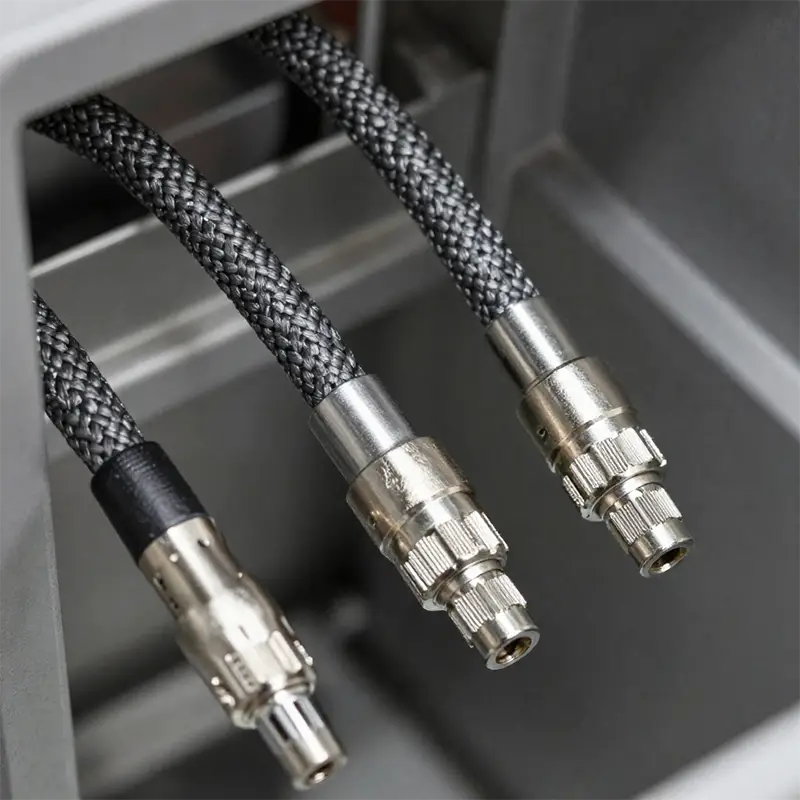
Introduction: Precision Under Pressure
Autoclaves are the unsung heroes of modern industry—reliably sterilizing equipment, curing advanced composites, and supporting a vast range of high-pressure, high-temperature processes. Whether in aerospace, medical device manufacturing, or laboratory research, autoclaves must perform with unwavering consistency and safety.
Yet, beneath the steel shell and pressurized chamber lies a critical infrastructure of electrical wiring and signal transmission. Here, the stakes are high: compromised cables can lead to temperature instability, safety failures, or costly downtime. Off-the-shelf wiring is rarely enough. Instead, industry leaders are turning to custom cable manufacturers for precision-engineered solutions that match the specific demands of their autoclave systems.
This article explores how custom cable assemblies are transforming autoclave design—delivering the reliability, flexibility, and performance required in today’s most demanding thermal environments.
Why Standard Cables Often Fall Short in Autoclave Environments
The Challenge of Heat, Pressure, and Moisture
Autoclaves operate under extreme conditions—temperatures typically range from 250°F to 300°F (121°C to 149°C), with pressure levels reaching 15–30 psi or more. Add to this the presence of saturated steam or vacuum conditions, and you’ve got an environment that challenges the limits of standard wire and insulation materials.
Off-the-shelf cables may degrade rapidly, leading to:
- Loss of electrical conductivity
- Brittle or melted insulation
- Water ingress and corrosion
- Premature failure and system downtime
Tight Space, Tight Specs
Modern autoclaves are highly compact. Engineers must fit multiple control systems, heating elements, and sensor arrays into a sealed, thermally stressed unit. Cabling must be flexible enough to handle tight routing while robust enough to maintain integrity over repeated cycles.
This balance of performance and design efficiency is precisely where custom cable manufacturers step in.
The Case for Custom Cable Assemblies in Autoclave Systems
1. Tailored Materials for Specific Use Cases
One of the primary advantages of working with custom cable manufacturers is the ability to select materials that match the exact application.
For autoclaves, this may include:
- High-temperature insulation: PTFE, PFA, silicone rubber, or fiberglass for thermal endurance
- Moisture resistance: Dual-jacketed or vapor-sealed cables to prevent steam penetration
- Chemical resilience: Shielded from cleaning agents or sterilants used between cycles
- Low outgassing materials: Critical for autoclaves in cleanroom or aerospace settings
With custom solutions, you’re not guessing—you’re engineering for certainty.
2. Design Flexibility That Optimizes System Layout
Standard wire spools often force engineers to compromise on system layout. Custom cables, by contrast, can be built to:
- Specific lengths and gauge sizes
- Unique conductor configurations (e.g., power + signal in one jacket)
- Flexible routing through complex geometries
This design adaptability helps reduce clutter, improve airflow within enclosures, and ultimately simplify maintenance or upgrades.
3. Integration of Sensors, Heating Elements, and Controls
In high-performance autoclaves, it’s common to see embedded systems that integrate:
- RTDs or thermocouples
- Heating wires or pads
- Signal transmission cables
- Feedback loops and pressure sensors
Custom cable assemblies allow these components to be combined into a single, cohesive wiring harness—reducing failure points and improving signal integrity. This modular approach also accelerates production and service timelines.
4. Enhanced Durability and Lifecycle Cost Savings
While custom cables may require a higher upfront investment, they often reduce long-term costs by:
- Extending the life of internal wiring
- Minimizing replacement frequency
- Decreasing labor costs for service and diagnostics
- Reducing the risk of catastrophic failure or recalls
For OEMs building autoclaves at scale—or facilities running continuous sterilization cycles—this translates into significant ROI.
Case Study: Medical Autoclave Manufacturer Increases Uptime with Custom Harnesses
A leading US-based medical device company experienced recurring sensor failures inside its Class B autoclaves. Root cause analysis pointed to cable degradation near steam inlets, where temperatures spiked during cycle peaks.
By partnering with a custom cable manufacturer, they implemented:
- Nickel-plated copper conductors
- Dual-jacketed silicone and PTFE insulation
- Integrated thermocouple + power lines
The result? A 40% reduction in cable replacements and a 25% improvement in service intervals across two production lines. Technicians also reported improved ease-of-access due to cleaner routing and labeled harnesses.
Certifications and Compliance in Custom Autoclave Wiring
Working with experienced cable manufacturers also ensures compliance with key standards such as:
- UL 758 (Wiring harnesses for equipment)
- RoHS/REACH (Material safety compliance)
- ISO 13485 (Medical device cable applications)
- AS9100 (Aerospace-grade wiring)
These certifications are vital for autoclave systems used in regulated industries such as healthcare, pharma, and aerospace manufacturing.
What to Look for in a Custom Cable Manufacturer for Autoclaves
Choosing the right partner is as important as choosing the right materials. Here are key capabilities to look for:
1. Engineering Consultation
Look for manufacturers that offer design collaboration early in the product development cycle. The best partners act as an extension of your engineering team.
2. Prototyping and Testing Services
Thermal testing, insulation breakdown analysis, and moisture ingress validation should be standard practice—especially for autoclave-rated products.
3. Vertical Integration
Manufacturers who handle design, extrusion, jacketing, and assembly in-house often provide better consistency and lead times.
4. Industry Experience
Ask about experience in regulated sectors. Autoclave-ready cable design is not plug-and-play; it requires material science knowledge and environmental stress testing.
Future Trends: Smarter, Smaller, More Connected
As autoclaves evolve, cabling must evolve too. Emerging trends include:
- Miniaturized connectors and wire profiles to support more compact designs
- Embedded smart sensors for real-time cycle analytics
- Hybrid fiber-electric cables to support communication between sterilization units and facility-wide automation platforms
Custom cable manufacturers are increasingly becoming R&D partners, helping OEMs unlock innovation at the wiring level.
Conclusion: Precision Starts with the Right Connections
Autoclaves are precision tools, and they demand equally precise internal systems. From thermal integrity to design compactness, electrical reliability to compliance assurance—custom cable assemblies play a foundational role in autoclave performance.
Partnering with the right custom cable manufacturer is not just a procurement decision; it’s an engineering strategy. When designed correctly, these wiring solutions reduce risk, enhance usability, and extend the lifespan of your systems.
Call to Action:
Looking to elevate your autoclave performance with purpose-built wiring?
At Pelican Wire, we specialize in custom cable manufacturing for high-temperature, high-pressure environments. Let’s design a solution tailored to your application—from prototyping to production. Contact Our Engineering Team to get started.