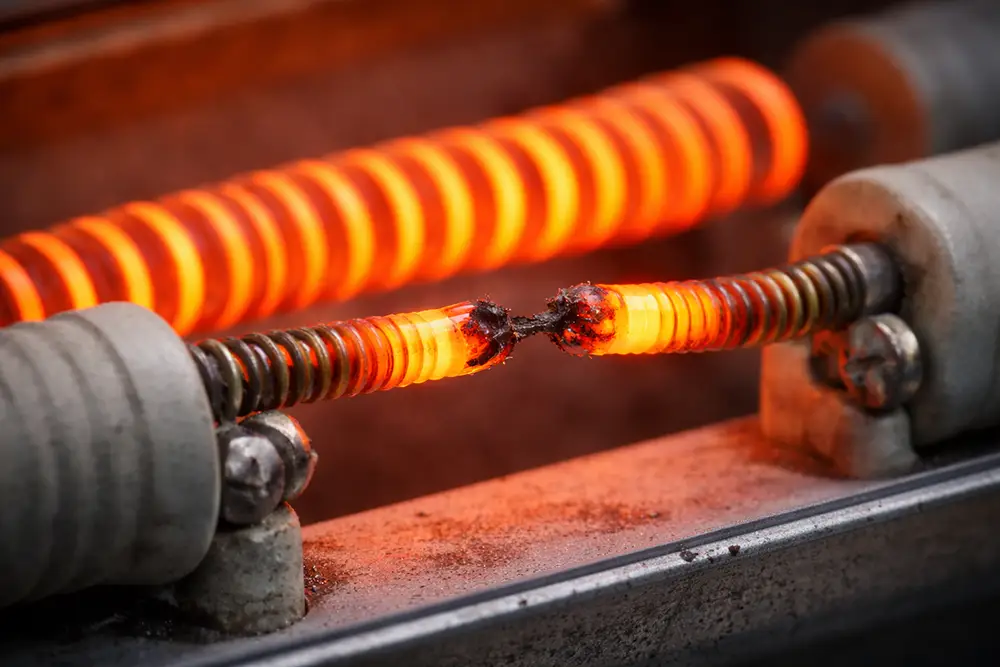
Nichrome wire is one of the most popular heating wires in the world. It’s used in industrial ovens, packaging equipment, furnaces, and many other heating systems because it’s durable and reliable.
But even high-quality nichrome wire can break.
If you’re asking, “Why does nichrome wire keep failing?” you’re not alone. Wire failure can lead to downtime, repair costs, and production delays.
In this guide, Pelican Wire explains the most common causes of nichrome wire breakage, and how to prevent them.
Quick Answer: Why Does Nichrome Wire Break?
Nichrome wire usually breaks due to:
- Overheating
- Mechanical stress
- Poor installation
- Oxidation over time
- Power surges
- Improper gauge selection
Let’s break these down.
1. Overheating
The most common reason nichrome wire fails is excessive heat.
Even though nichrome handles high temperatures well, pushing it beyond its rating shortens its life.
Signs of overheating include:
- Uneven glowing
- Dark or thin sections
- Frequent element replacement
Running wire too hot weakens it over time until it snaps.
2. Mechanical Stress and Tight Installation
Nichrome expands when heated. If it’s tightly secured with no room to expand, stress builds up.
Common installation issues:
- Wire stretched too tight
- No allowance for expansion
- Coils packed too closely
- Sharp bends
Repeated heating and cooling cycles increase stress and eventually cause breakage.
3. Vibration and Movement
In industrial environments, equipment vibrates. If nichrome wire is exposed to constant vibration without proper support, weak points develop.
Over time, vibration can:
- Thin out certain sections
- Create cracks
- Lead to sudden failure
4. Oxidation Over Time
Nichrome forms a protective surface layer when heated. This helps protect it. However, in extreme or contaminated environments, oxidation can gradually weaken the wire.
Factors that accelerate oxidation:
- High humidity
- Chemical exposure
- Contaminated air
- Very high operating temperatures
Eventually, the wire becomes brittle.
5. Incorrect Gauge Selection
Using wire that is too thin for the required load is a common mistake.
Thin wire:
- Heats faster
- Has higher resistance per foot
- Is more fragile
If the gauge is undersized, it may not withstand long-term operation.
6. Power Surges or Electrical Issues
Sudden voltage spikes can cause wire to heat too quickly. This creates thermal shock, which weakens the wire. Repeated electrical stress reduces lifespan significantly.
7. Hot Spots from Poor Design
If coils touch each other or airflow is restricted, certain sections become hotter than others. These “hot spots” fail first. Uniform spacing and proper design prevent this issue.
How to Prevent Nichrome Wire from Breaking
Choose the Correct Gauge
Match wire thickness to power requirements.
Avoid Running at Maximum Temperature
Design with a safety margin.
Allow for Expansion
Install with slight slack, not tight tension.
Maintain Proper Coil Spacing
Prevent hot spots.
Protect from Vibration
Use proper supports in industrial settings.
Use High-Quality Wire
Consistent manufacturing quality matters.
At Pelican Wire, we focus on consistent alloy composition and reliable performance to reduce early failure.
FAQ: Nichrome Wire Breakage
How long should nichrome wire last?
It depends on operating temperature and environment, but proper installation greatly increases lifespan.
Does thicker nichrome wire last longer?
Often yes, especially in high-vibration environments.
Can nichrome wire be repaired?
Usually, replacement is safer and more reliable.
Why does nichrome become brittle?
Prolonged heat exposure and oxidation can cause brittleness.
Ensuring Longer Nichrome Wire Life in Industrial Applications
Nichrome wire is known for its durability, but long-term performance depends on proper selection, installation, and operating conditions.
Most nichrome wire failures can be traced back to a few preventable issues:
- Running beyond recommended temperatures
- Choosing the wrong gauge
- Tight installation without expansion allowance
- Poor airflow or coil spacing
- Electrical surges or vibration stress
By addressing these factors early, manufacturers can significantly extend heating element lifespan and reduce costly downtime.
Reliable heating systems begin with high-quality wire and thoughtful design. At Pelican Wire, we focus on delivering consistent, dependable nichrome heating wire solutions that perform under demanding industrial conditions. When properly selected and installed, nichrome wire can provide stable, efficient heating for years, helping your operation stay productive and reliable.