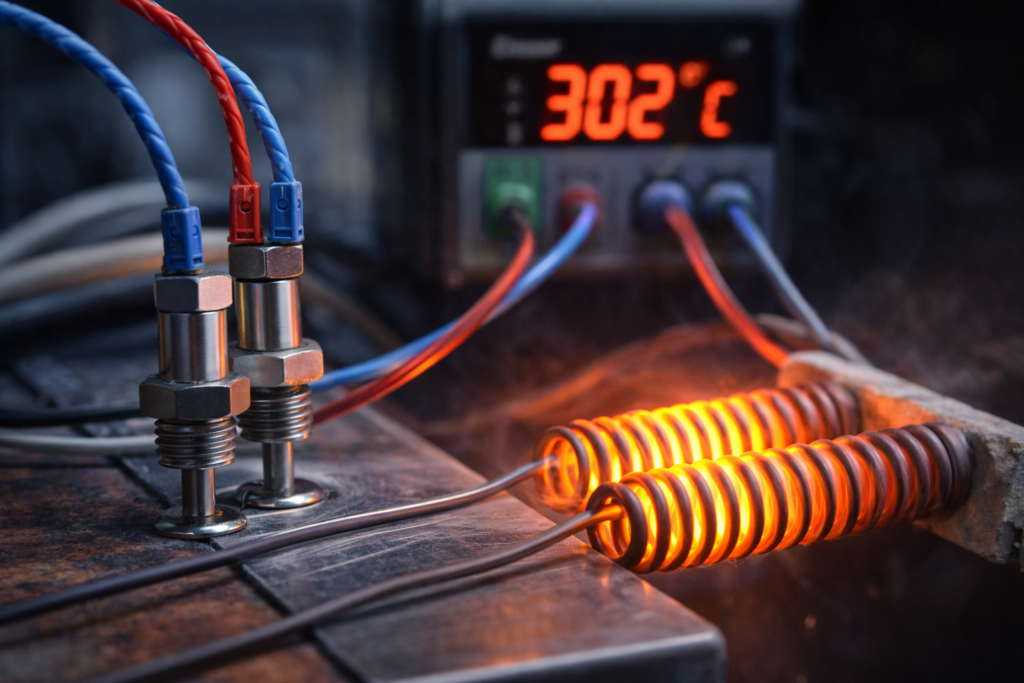
Thermocouple wire and resistance wire work together by forming a complete heating and control system. Resistance wire generates heat, while thermocouple wire measures that heat and sends feedback to maintain the desired temperature. Together, they ensure accurate, safe, and efficient heating.
Understanding the Roles of Each Wire
In any heating system, there are two key functions:
- Creating heat
- Monitoring temperature
These are handled by two different types of wire.
What Resistance Wire Does
Resistance wire is designed to produce heat when electricity flows through it.
It is used in:
- Heating elements
- Industrial ovens
- Sealing machines
- Furnaces
The wire heats up as current passes through it, providing the thermal energy needed for the process.
What Thermocouple Wire Does
Thermocouple wire measures temperature and sends that information to a controller. It acts as the system’s “sensor,” helping regulate heat levels.
How They Work Together in a System
Think of it like a thermostat system:
- Resistance wire = the heater
- Thermocouple wire = the thermometer
Here’s how the process works step by step:
- Resistance wire heats up when power is applied
- Thermocouple wire senses the temperature
- The system compares actual temperature to the target
- Power is adjusted automatically
- Temperature stays consistent
This cycle happens continuously to maintain stable heat.
Why This Combination Is Important
Using both wires together provides several advantages:
1. Accurate Temperature Control
Without thermocouple feedback, resistance wire would continue heating without control. Thermocouple wire ensures the system stays within the desired range.
2. Improved Safety
Overheating can damage equipment or create hazards. Thermocouples help prevent this by signaling when temperatures get too high.
3. Better Energy Efficiency
When systems only use the power they need, energy waste is reduced. This leads to lower operating costs.
4. Consistent Product Quality
In manufacturing, consistent temperature is critical. This combination ensures repeatable results in processes like
- Heat sealing
- Plastic molding
- Metal treatment
Common Applications Where Both Are Used
Thermocouple and resistance wire systems are found in:
- Industrial ovens and furnaces
- Food processing equipment
- Packaging machinery
- Automotive production lines
- Laboratory equipment
These systems rely on both heating and monitoring for reliable operation.
What Happens If One Component Fails?
If Resistance Wire Fails:
- No heat is generated
- Production stops
If Thermocouple Wire Fails:
- Temperature readings become inaccurate
- Risk of overheating or underheating
Both components are essential for system performance.
Best Practices for Using Both Wires Together
To get the best performance:
- Match resistance wire to your heating requirements
- Choose the correct thermocouple type
- Install wires with proper spacing and routing
- Protect wires from vibration and damage
- Use quality materials from trusted manufacturers
At Pelican Wire, we help ensure both heating and sensing wires work seamlessly together.
FAQ: Thermocouple and Resistance Wire
Can resistance wire work without a thermocouple?
Yes, but it won’t have accurate temperature control.
Why are both wires needed?
One generates heat, and the other controls it for safe operation.
Which industries use both?
Manufacturing, aerospace, food processing, and many more.
Does thermocouple placement matter?
Yes, proper placement ensures accurate readings.
Can Pelican Wire supply both types?
Yes, Pelican Wire offers both resistance heating wire and thermocouple wire solutions.
Building Reliable Heating Systems with the Right Wire
A well-designed heating system depends on both heat generation and temperature control working together. Resistance wire provides the heat, while thermocouple wire ensures that heat stays within the correct range. When both are properly selected and installed, the result is a system that is:
- Reliable
- Efficient
- Safe
- Consistent
At Pelican Wire, we support manufacturers with high-quality wire solutions that help create dependable heating systems built for long-term performance.