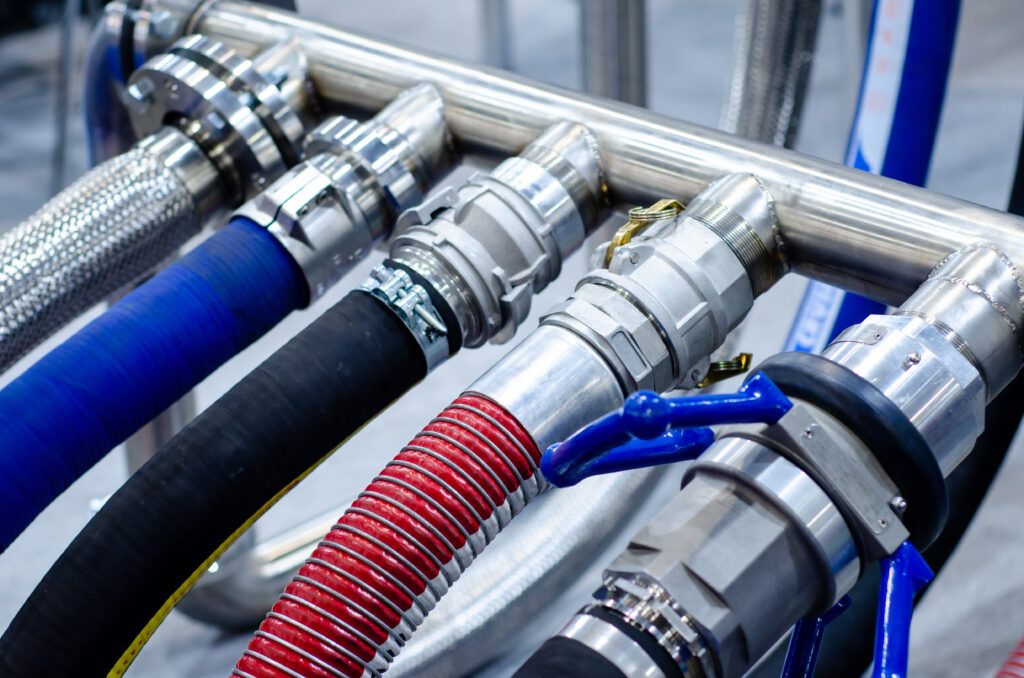
Heated hoses are the unsung heroes of countless industrial processes, ensuring the smooth, temperature-controlled flow of everything from viscous adhesives and food products to temperature-sensitive chemicals and automotive fluids. The performance and reliability of these critical components hinge on the design of their core element: the heating wire. This wire must not only provide consistent and efficient heat but also withstand the demanding mechanical stresses of a dynamic environment. Designing a heating wire for a heated hose is a balancing act — a delicate interplay between electrical performance, mechanical durability, and material science.
At Pelican Wire, we specialize in engineering custom resistance wire solutions that are precisely tailored to the unique challenges of heated hose applications. This article delves into the key design considerations that ensure a heated hose’s heating element is both flexible and durable enough to deliver reliable performance over the long term.

The Core Challenge: Flexibility and Durability
Unlike static heating elements, the wire in a heated hose is in constant motion. It is subjected to repeated bending, flexing, and vibration as the hose is routed, handled, and used. This dynamic environment places immense stress on the heating wire, making flexibility and durability the two most critical design parameters.
Flexibility is the wire’s ability to bend without breaking. A flexible heating wire can be easily routed through the complex geometries of a heated hose and can withstand the repeated flexing that occurs during use. Durability is the wire’s ability to resist mechanical and electrical degradation over time. A durable heating wire will maintain its performance and integrity even after thousands of flex cycles and thermal cycles.
Achieving the optimal balance of flexibility and durability requires careful consideration of the heating wire’s construction, from the choice of alloy to the stranding configuration and insulation material.
Alloy Selection: The Foundation of Performance
The choice of resistance alloy is the foundation of any heating wire design. The alloy determines the wire’s resistivity, its temperature coefficient of resistance (TCR), and its resistance to oxidation and corrosion. For heated hose applications, where the wire is often subjected to a wide range of temperatures and environmental conditions, selecting the right alloy is paramount.
| Alloy Family | Common Alloys | Key Characteristics for Heated Hoses |
| Nickel-Chromium (Nichrome) | Nichrome 80 (80% Ni, 20% Cr), Nichrome 60 (60% Ni, 16% Cr) | Excellent oxidation resistance, stable resistance at high temperatures, good ductility. The workhorse for many heating applications. |
| Iron-Chromium-Aluminum (FeCrAl) | Kanthal A-1, Alloy 875 | Superior high-temperature strength and oxidation resistance, but can be more brittle than Nichrome. Best for extreme-temperature static applications. |
| Copper-Nickel (CuNi) | Alloy 30, 60, 90 | Lower resistance and operating temperatures, but excellent corrosion resistance and high ductility. Ideal for lower-temperature or precision control applications. |
For most heated hose applications, Nichrome alloys offer the best combination of performance and cost-effectiveness. Their inherent ductility makes them well-suited for dynamic applications, while their stable resistance ensures consistent heating performance.

Stranding: Engineering for Flex Life
While the alloy provides the fundamental electrical properties, the wire’s mechanical flexibility is largely determined by its construction. A solid conductor, while simple to manufacture, is rigid and prone to fatigue failure when subjected to repeated bending. This is where stranding comes into play.
Stranding involves twisting multiple smaller-gauge wires (or “ends”) together to create a single, larger-gauge conductor. This construction dramatically improves the wire’s flexibility and “flex life” — its ability to withstand repeated bending cycles before breaking.
At Pelican Wire, we can strand anywhere from 2 to 19+ ends of wire as fine as 45 AWG (0.00175 inches). This allows us to engineer a conductor with the precise combination of resistance and flexibility required for any given heated hose application.
By using a stranded conductor, the stresses of bending are distributed among the individual strands, reducing the strain on any single point in the wire. This significantly increases the wire’s resistance to metal fatigue and extends the operational life of the heated hose.
Insulation: The Protective Barrier
The insulation is the final piece of the puzzle, providing a protective barrier that shields the heating wire from electrical shorts, chemical exposure, and mechanical abrasion. For heated hose applications, the insulation must be as flexible and durable as the conductor it protects.
High-performance fluoropolymers are the materials of choice for heated hose insulation, offering an exceptional combination of properties:
Fluorinated Ethylene Propylene (FEP): FEP is a versatile and widely used fluoropolymer that offers excellent electrical insulation, chemical inertness, and a wide operating temperature range (up to 200°C / 392°F). Its flexibility and durability make it an ideal choice for many heated hose applications.
Polytetrafluoroethylene (PTFE): PTFE offers even higher temperature performance (up to 260°C / 500°F) and superior chemical resistance. It is also extremely flexible and has a very low coefficient of friction, which can be beneficial in applications where the wire may rub against other components.
Pelican Wire offers a wide range of insulation materials and thicknesses, allowing us to tailor the insulation to the specific requirements of your application. The insulation’s thickness is a critical parameter, as it determines the wire’s voltage rating and its overall diameter, which must be carefully controlled to ensure a proper fit within the heated hose assembly.
Precision Resistance: Consistent Heat, Every Time
In a heated hose application, consistent and predictable heat generation is critical. Variations in the wire’s resistance can lead to uneven heating, hot spots, and potential damage to the material being transported. That’s why Pelican Wire places a premium on resistance precision.
Our manufacturing processes and quality controls allow us to achieve resistance tolerances as tight as +/- 1%, well below the industry standard of +/- 5%. This level of precision ensures that the heating wire delivers a consistent, predictable output, enabling accurate temperature control and reliable performance.

The Pelican Wire Advantage: Custom-Engineered Solutions
There is no one-size-fits-all solution when it comes to heating wire for heated hoses. Every application has its own unique set of challenges and requirements. That’s why Pelican Wire takes a custom-engineering approach to every project.
Our team of experienced engineers works closely with you to understand the specific demands of your application. We then leverage our extensive knowledge of materials, stranding, and insulation to design and manufacture a heating wire solution that is optimized for flexibility, durability, and performance.
From selecting the optimal resistance alloy and stranding configuration to specifying the ideal insulation material and thickness, we control every aspect of the design and manufacturing process to ensure that our heating wire meets your exact specifications. Our commitment to quality and precision ensures that your heated hose will perform reliably and efficiently, day in and day out.
Ready to design a more flexible and durable heated hose? Contact Pelican Wire today to discuss your project with one of our wire experts.