In the intricate world of electrical and thermal design, the choice of conductor is a foundational decision that can have cascading effects on the performance, reliability, and longevity of a product. While often overlooked, the distinction between solid and stranded resistance wire is a critical consideration for any engineer designing a heating element. This choice is not merely a matter of preference; it is a strategic decision that impacts everything from flexibility and fatigue resistance to current carrying capacity and cost.
Solid wire, a single, robust conductor, has long been the standard for many static applications. It is simple, cost-effective, and provides excellent structural integrity. However, as technology advances and applications become more dynamic and complex, the limitations of solid wire become increasingly apparent. This is where stranded wire, a composite of multiple fine wire strands twisted or braided together, emerges as a high-performance alternative, offering a suite of advantages that are essential for modern, demanding applications.
This article provides a comprehensive performance comparison between stranded and solid resistance wire, exploring the key mechanical and electrical differences. By understanding the nuanced trade-offs between these two conductor types, engineers can make more informed decisions, optimizing their designs for performance, durability, and efficiency.
Mechanical Properties: Flexibility and Fatigue Resistance
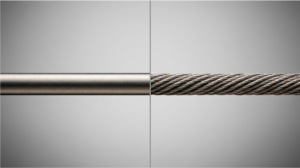
The most significant and immediately apparent difference between stranded and solid wire lies in their mechanical properties. The very nature of their construction dictates how they behave under physical stress.
Flexibility
Solid wire, by its nature, is rigid. While it can be bent and shaped, its single, thick core resists deformation. This rigidity can be an advantage in applications where the wire must hold a specific shape, but it becomes a significant drawback in products that require the wire to be routed through tight spaces, around sharp corners, or into complex geometries. Attempting to force a solid wire into such a configuration can lead to kinking, which creates hot spots and potential points of failure.
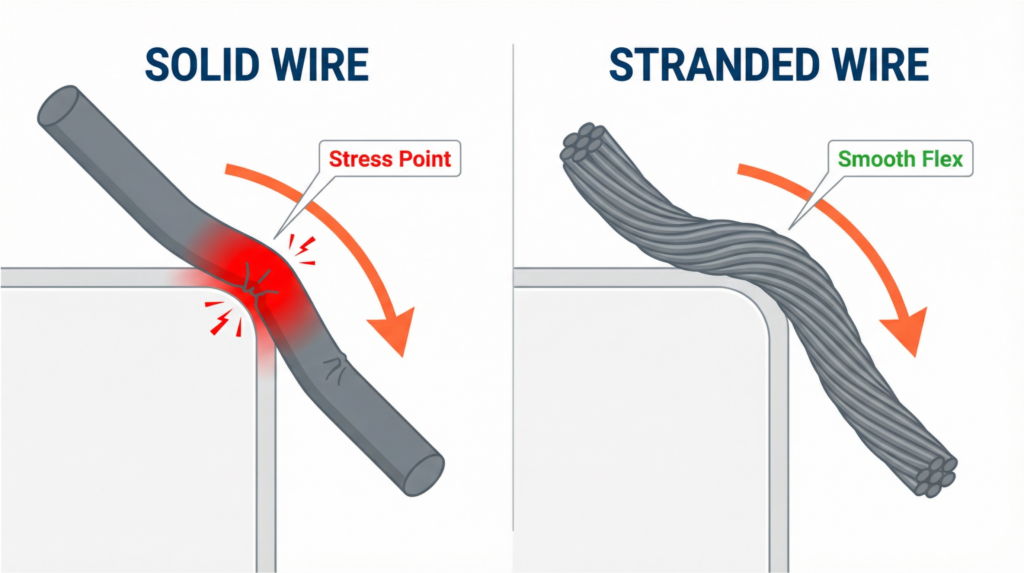
Stranded wire, in contrast, is defined by its flexibility. Because it is composed of numerous fine, individual strands, the overall cable is far more pliable. Each strand can move and shift independently, allowing the cable to bend and flex with minimal effort. This makes stranded wire the ideal choice for applications such as heated clothing, medical devices, and complex aerospace assemblies where the wiring path is intricate and space is at a premium.
Fatigue Resistance and Flex Life
In dynamic applications where the wire is subjected to repeated bending, vibration, or movement, fatigue resistance becomes the most critical performance metric. This is where the superiority of stranded wire is most pronounced.
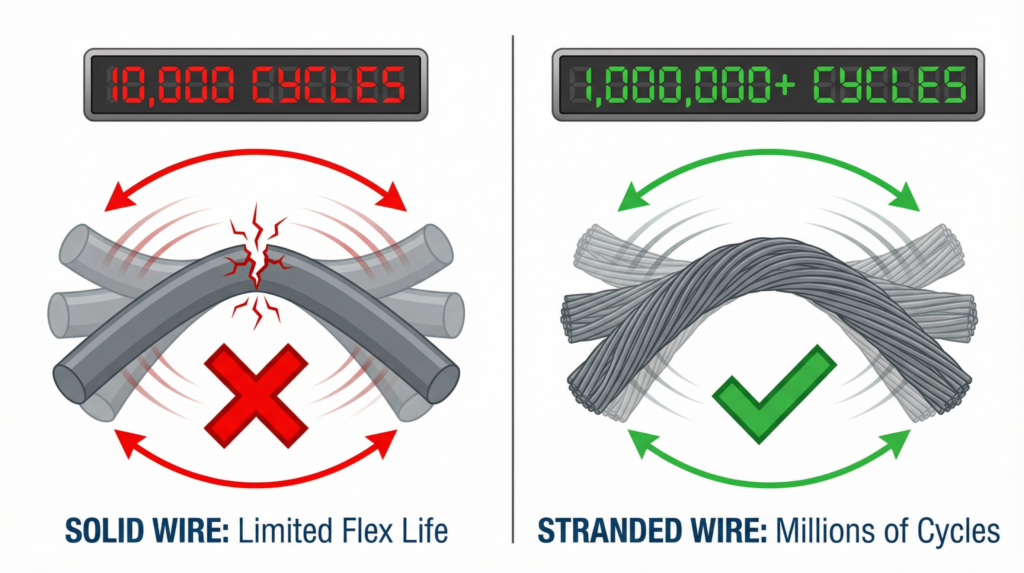
When a solid wire is repeatedly flexed, it undergoes a process of work hardening. The metal becomes brittle over time, and microscopic cracks begin to form. Eventually, these cracks propagate, leading to a complete failure of the conductor. The flex life of a solid wire is therefore inherently limited.
Stranded wire is specifically designed to overcome this limitation. As the cable bends, the individual strands can slide past one another, distributing the stress across the entire bundle. This prevents any single point from bearing the full brunt of the mechanical strain. The result is a dramatically extended flex life, often reaching millions of cycles without failure. This makes stranded wire the only viable option for applications such as robotic arms, heated hoses, and any other product where the heating element will be in constant motion.
Electrical Properties: Current Carrying Capacity and the Skin Effect
Beyond the mechanical advantages, the choice between stranded and solid wire also has significant implications for electrical performance, particularly concerning current carrying capacity and the behavior of alternating current (AC).
Current Carrying Capacity (Ampacity)
At a fundamental level, the ampacity of a wire is determined by its cross-sectional area. For direct current (DC) applications, a solid wire and a stranded wire of the same American Wire Gauge (AWG) will have roughly the same current carrying capacity. However, the reality is more complex.
A stranded wire of the same AWG size as a solid wire will have a slightly larger overall diameter due to the small air gaps between the strands. While the total cross-sectional area of the metal is the same, the construction can influence heat dissipation. The larger surface area of the individual strands can, in some cases, allow for more effective cooling, potentially enabling a slightly higher ampacity in certain conditions.
The Skin Effect
The most important electrical difference emerges in AC applications, especially at higher frequencies. AC current does not flow uniformly throughout the cross-section of a conductor. Instead, it tends to concentrate on the outer surface, or “skin,” of the wire. This phenomenon is known as the skin effect.
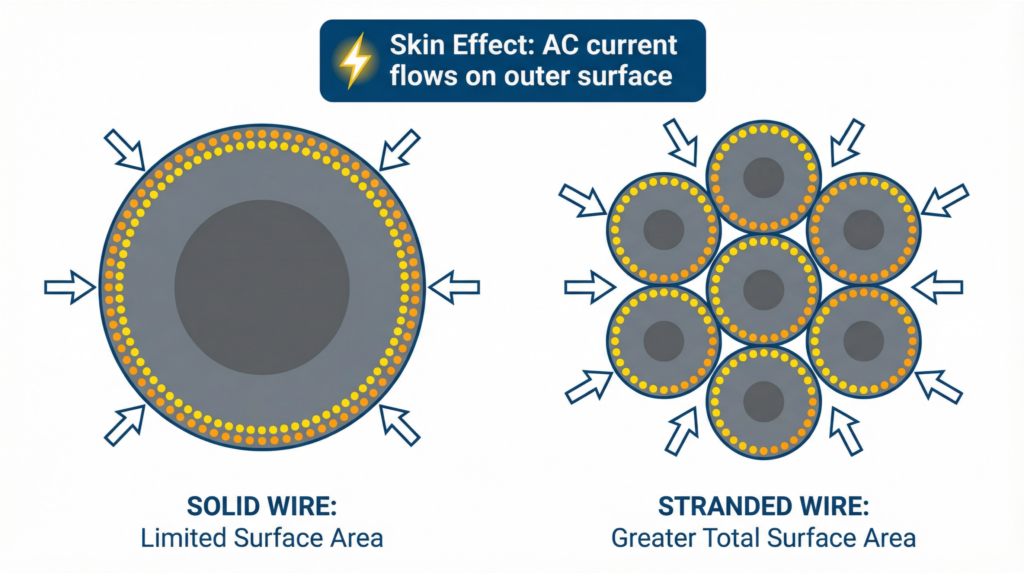
In a solid wire, the skin effect limits the effective conductive area to a thin layer on the outside, rendering the center of the wire underutilized. This increases the effective resistance of the wire and reduces its current carrying capacity.
Stranded wire provides a natural solution to this problem. Because it is composed of many individual strands, the total surface area of the conductive material is significantly greater than that of a solid wire of the same gauge. Even though each individual strand is still subject to the skin effect, the cumulative surface area of all the strands provides a much larger path for the current to flow. This mitigates the impact of the skin effect, resulting in lower effective resistance and a higher current carrying capacity in AC applications.
Other Considerations: Cost and Termination
While stranded wire offers clear performance advantages in many areas, there are other practical factors to consider.
- Cost: Due to the more complex manufacturing process required to strand multiple fine wires, stranded wire is generally more expensive than solid wire of the same gauge and material.
- Termination: Terminating a solid wire is straightforward; it can be easily clamped, screwed down, or soldered. Terminating a stranded wire requires more care. It is often necessary to use a crimp-on terminal or to tin the end of the wire with solder to ensure that all strands are captured in the connection and to prevent fraying.
Conclusion: Choosing the Right Wire for the Job
The decision between stranded and solid resistance wire is a critical engineering choice that should be driven by the specific demands of the application. There is no single “best” option; there is only the right option for the job.
Solid wire remains a viable and cost-effective choice for static applications where it will not be subjected to movement or vibration, and where its rigidity is not a hindrance to installation.
Stranded wire, however, is the clear and necessary choice for any application that involves:
- Flexibility: Complex routing, tight spaces, or non-linear shapes.
- Durability: High vibration, repeated flexing, or any form of dynamic stress.
- AC Performance: High-frequency applications where the skin effect is a concern.
At Pelican Wire, we specialize in engineering custom-stranded wire solutions. We can co-twist multiple ends of wire as fine as 45 AWG, using a wide range of alloys to meet your precise requirements for flexibility, fatigue resistance, and electrical performance. By understanding the fundamental differences in performance, you can design more reliable, efficient, and long-lasting products. Don’t let the wrong wire choice hold your design back. Engage with experts who can help you build the perfect conductor from the inside out.